Private investigators play an important role in uncovering facts, locating individuals, and gathering information for personal, business, and legal matters. But investigative authority has limits. At TJS Private Investigations, we believe understanding what an investigator can and cannot legally do is essential to protecting clients, respecting privacy, and conducting professional investigations.
When someone hires a private investigator, they often have one primary objective: obtaining information they haven't been able to uncover on their own.
A spouse may want to verify suspicious activities. An attorney may need help locating a witness. A business owner may suspect employee misconduct. A parent may need documentation relevant to a child custody dispute.
In each situation, the client wants answers. But how those answers are obtained matters just as much as the information itself.
At TJS Private Investigations, we understand that professional investigative work requires more than experience and specialized equipment. It requires an understanding of applicable laws, privacy protections, investigative limitations, and the responsibilities associated with gathering information about other people.
Texas permits licensed private investigators to perform a variety of investigative services. However, holding a private investigator license does not grant unrestricted access to personal information, private property, communications, or government records.
Understanding these boundaries can help clients recognize legitimate investigative practices and avoid agencies that promise services they cannot lawfully provide.
1. Private Investigators Can Conduct Surveillance in Texas
Surveillance is one of the most recognized services associated with private investigation.
At TJS Private Investigations, surveillance may be considered when a client needs factual documentation of activities relevant to a legitimate personal, business, insurance, or legal concern.
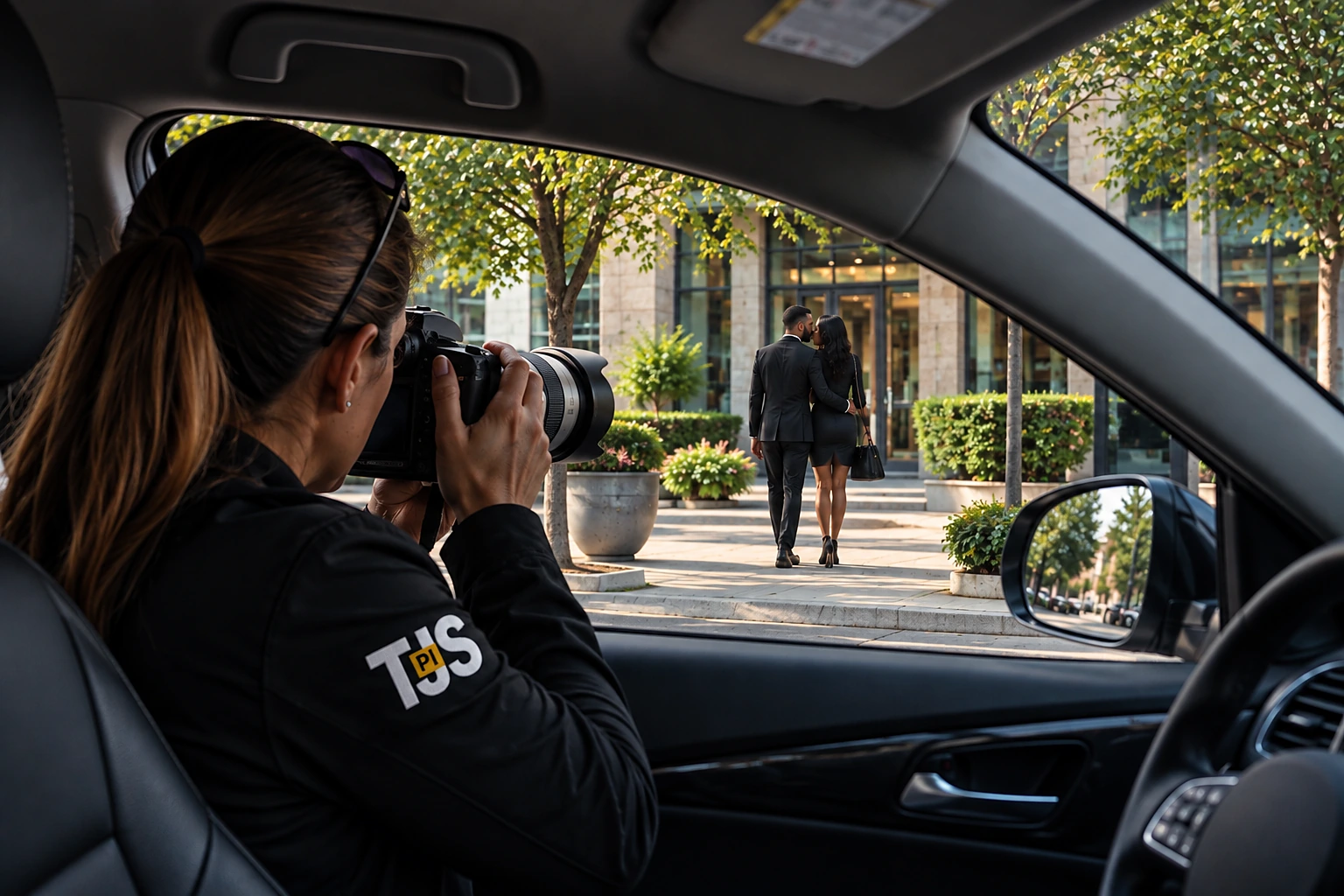
Surveillance can involve observing and documenting a person's activities from locations where the investigator is legally permitted to be.
For example, an investigator may observe a subject arriving at a public restaurant, entering a commercial establishment, or traveling along public roadways.
Depending on the circumstances, investigators may document observations through written notes, photographs, or video.
However, surveillance must remain within legal boundaries.
Private investigators cannot trespass onto private property, engage in unlawful stalking or harassment, or disregard reasonable expectations of privacy.
An investigator also cannot assume that every recording is lawful simply because it takes place outside.
Texas law and other applicable laws may restrict certain recording practices, including recording private communications or conduct in locations where individuals have legally protected privacy interests.
From Our Investigative Perspective: Surveillance Is About Documentation
At TJS Private Investigations, we believe effective surveillance requires patience, planning, and accurate reporting.
Consider an investigation involving concerns about someone's activities after work.
An investigator may be assigned to observe the subject during a particular time period and document relevant activities that can be lawfully observed.
If the subject travels to a restaurant, visits another location, or returns home, those observations may become part of the investigative report.
What the investigator should not do is assume that an observed activity proves misconduct without supporting evidence.
Professional surveillance should distinguish between what was directly observed and what remains unknown.
2. Private Investigators Can Perform Background Investigations
Background investigations can help individuals, attorneys, and businesses evaluate information about a person or organization.
Depending on the purpose and legal authority for the search, investigators may examine publicly available court records, property information, business registrations, professional licensing records, and other legally accessible sources.
At TJS Private Investigations, we recognize that background investigations serve different purposes.
A business may need information about a potential partner. An attorney may require research related to litigation. An individual may need to verify information relevant to a legitimate personal concern.
However, not all personal information is publicly accessible.
Private investigators cannot automatically access someone's credit report, protected financial records, medical information, or other restricted data simply because a client requests it.
Federal and state privacy laws may limit how information is obtained and used.
For example, the Fair Credit Reporting Act may apply when background information is obtained or used for employment, housing, credit, or other covered eligibility decisions.
The appropriate legal basis, required disclosures, and any necessary authorizations must be considered before conducting these searches.
Our perspective is straightforward: access to information should always be evaluated in relation to the legitimate purpose of the investigation.
3. Private Investigators Can Help Locate Missing Persons and Witnesses
Locating individuals is another important area of investigative work.
People may become difficult to locate because they have relocated, changed names, disconnected from former associates, or stopped maintaining publicly available contact information.
At TJS Private Investigations, locate investigations may involve family matters, legal proceedings, estate administration, and other legitimate purposes.
An investigator may review public records, examine historical address information, identify possible associations, and develop leads that help determine an individual's whereabouts.
For example, an attorney may need to locate a witness who observed an incident several years earlier.
The investigator may begin with the witness's last known information and conduct lawful research to identify potential current contact details.
However, locating someone does not automatically authorize disclosing their address or other sensitive information to every requesting party.
Investigators should consider privacy, safety, the purpose of the request, and applicable legal restrictions.
In some situations, an appropriate approach may involve facilitating contact without unnecessarily disclosing a person's private location.
4. Private Investigators Can Gather Evidence for Attorneys and Legal Proceedings
Attorneys frequently work with private investigators when additional factual development is needed.
Investigators may assist with locating witnesses, documenting scenes, conducting lawful research, reviewing available information, and identifying potential sources of evidence.
At TJS Private Investigations, we recognize that investigative findings may become part of important legal decisions.
For that reason, documentation should be accurate, organized, and clear about the source of the information.
Consider a personal injury case in which the parties disagree about what occurred.
An investigator may attempt to locate witnesses, document relevant physical conditions, or identify additional information that could assist the attorney.
The investigator's responsibility is to report factual findings rather than determine legal liability.
It is also important to understand that information gathered by an investigator is not automatically admissible in court.
Admissibility depends on applicable evidentiary rules, the method of collection, relevance, authentication, and other legal considerations.
Attorneys and courts ultimately determine how investigative information may be used in legal proceedings.
5. Private Investigators Can Investigate Suspected Infidelity
Infidelity investigations are a recognized type of personal investigative service.
When someone suspects that a spouse or partner may be engaging in undisclosed activities, they may seek independent documentation rather than relying solely on assumptions.
At TJS Private Investigations, we understand that these matters often involve emotional concerns and potentially significant family or financial decisions.
An investigator may conduct lawful surveillance in public locations, document relevant movements, and prepare factual reports describing observed activities.
However, private investigators cannot lawfully hack email accounts, access private messages without authorization, install spyware, or obtain protected communications through unlawful means.
A client also cannot authorize an investigator to violate another person's legal rights merely because the individuals are married or in a relationship.
From Our Investigative Perspective: Suspicion Does Not Establish Infidelity
A client may believe that repeated late-night absences indicate an affair.
Surveillance might document where the individual travels and what activities are observable during the assignment.
But visiting a particular location or meeting another person does not automatically establish an intimate relationship.
At TJS Private Investigations, we believe investigative findings should be reported without exaggeration or unsupported conclusions.
The objective is to provide reliable information that allows the client to evaluate the situation.
6. Private Investigators Can Assist With Child Custody Investigations
Child custody investigations require particular care because the information gathered may affect children and families.
Parents or attorneys may request investigative assistance when concerns arise about compliance with custody arrangements, supervision, or other circumstances relevant to a family law proceeding.
Depending on the situation, an investigator may document observable activities, identify potential witnesses, or research lawfully available information.
At TJS Private Investigations, we believe these investigations should remain focused on relevant facts rather than personal disagreements between parents.
Investigators do not determine custody arrangements, decide parental fitness, or replace the authority of family courts.
They must also avoid unlawful entry, harassment, unauthorized recording, or other improper investigative methods.
When concerns involve immediate danger to a child, emergency services or appropriate child protection authorities should be contacted.
7. Private Investigators Can Investigate Fraud and Business Misconduct
Businesses may retain private investigators when concerns arise about financial irregularities, employee misconduct, suspected fraud, or potential business relationships.
These investigations can involve reviewing authorized records, conducting interviews, examining public information, and documenting relevant activities.
At TJS Private Investigations, we recognize the importance of approaching business investigations objectively.
An unexplained financial loss does not necessarily mean an employee has committed theft.
Similarly, unusual business activity does not automatically establish fraud.
A properly structured investigation seeks to identify what happened, determine which facts can be substantiated, and distinguish documented findings from speculation.
Employers must also comply with applicable employment, privacy, discrimination, and labor laws.
Investigators should coordinate with legal counsel when an assignment involves sensitive workplace information or potential legal proceedings.
8. Can Private Investigators Access Phone Records, Bank Accounts, or Private Messages?
One of the most common misconceptions about private investigators is that they have unrestricted access to confidential information.
They do not.
Private investigators are not granted special authority to obtain protected personal records simply because they hold an investigative license.
Phone Records
Investigators generally cannot obtain another person's protected telephone records without proper legal authorization or another lawful basis.
Federal law restricts the use of deceptive practices to obtain confidential customer phone records.
Bank and Financial Records
Private investigators cannot simply access someone's bank balances, account statements, or financial transactions without authorization or a legally recognized basis.
Publicly recorded financial information, such as certain liens, judgments, or property records, may be available for lawful research.
Private Messages and Email Accounts
Accessing another person's email, messaging accounts, or protected electronic communications without authorization can violate federal or state law.
Investigators should not use hacking, stolen credentials, or spyware to obtain this information.
Medical Records
Medical information is subject to significant privacy protections.
An investigative license does not provide unrestricted access to another person's medical history.
At TJS Private Investigations, we believe clients should be cautious of anyone claiming they can obtain virtually any confidential record for a fee.
Professional investigative services must operate within the law.
9. Can a Private Investigator Put a GPS Tracker on Someone's Vehicle in Texas?
GPS tracking is an area where legal restrictions are especially important.
Texas Penal Code Section 16.06 addresses the unlawful installation of tracking devices on motor vehicles.
The statute includes specific circumstances and exceptions, but private investigators do not have blanket permission to install tracking devices on vehicles simply because a client requests surveillance.
Vehicle ownership, consent, legal authority, the investigator's role, and the circumstances of installation may all be relevant.
Other privacy and stalking laws may also apply.
At TJS Private Investigations, we believe any proposed use of tracking technology must be evaluated carefully before implementation.
Clients should not assume that being married to someone, sharing a vehicle, or paying for a vehicle automatically authorizes GPS tracking.
When questions arise about the legality of tracking a particular vehicle, obtaining legal guidance is an appropriate first step.
10. Can Private Investigators Enter Private Property or Impersonate Law Enforcement?
Private investigators do not possess the same powers as police officers.
An investigative license does not generally authorize an investigator to enter private property without permission, conduct a law enforcement search, or compel someone to answer questions.
Private investigators also cannot falsely represent themselves as police officers or claim government authority they do not possess.
At TJS Private Investigations, we believe maintaining a clear distinction between private investigative services and law enforcement authority is essential.
An investigator may ask questions, request voluntary cooperation, conduct lawful observations, and gather information through permitted methods.
However, individuals generally retain the right to decline voluntary interviews.
Investigators must also respect applicable trespass, impersonation, harassment, and privacy laws.
11. Are Private Investigators Required to Be Licensed in Texas?
Texas regulates private investigative services under Chapter 1702 of the Texas Occupations Code.
The Texas Department of Public Safety administers the state's Private Security Program, which oversees applicable licensing and registration requirements.
Individuals and businesses performing regulated investigative services must satisfy the requirements that apply to their activities and roles.
At TJS Private Investigations, we encourage prospective clients to verify that an investigative agency is properly authorized to provide services in Texas.
Licensing is an important consideration, but it should not be the only factor in selecting an agency.
Clients should also evaluate relevant investigative experience, professionalism, communication, documentation practices, and the proposed scope of work.
The Texas Department of Public Safety provides resources for checking private security licensing information.
12. What Should You Expect From a Professional Private Investigator?
A professional investigator should be able to explain the general purpose of an assignment, the investigative methods being considered, and the limitations that may affect the work.
At TJS Private Investigations, we believe clients should understand that an investigation is a fact-finding process, not a guarantee of a particular outcome.
Professional investigative practices should include:
A clearly defined investigative objective.
Appropriate legal authority for the work being performed.
Respect for privacy and property rights.
Accurate documentation of observations and findings.
Appropriate handling of sensitive client information.
Clear communication about the scope and limitations of the assignment.
Reporting that distinguishes established facts from assumptions.
An investigator should never promise to obtain protected information through unlawful methods or guarantee that a particular person will be found guilty of wrongdoing.
The credibility of an investigation depends in part on the integrity of the process used to obtain the information.
Our Perspective: Professional Investigations Begin With Legal and Ethical Responsibility
At TJS Private Investigations, we believe the responsibility of a private investigator extends beyond finding information.
Our work requires professional judgment, respect for legal boundaries, and an understanding that investigative findings can influence important decisions.
A client may be considering a divorce. An attorney may be preparing for litigation. A business owner may be evaluating suspected misconduct. A family may be searching for someone whose whereabouts are unknown.
Each situation presents different investigative objectives, but the same principle applies: the information must be pursued responsibly.
We believe clients should never have to choose between obtaining answers and respecting the law.
Professional investigators should recognize when information can be obtained through legitimate methods, when additional authorization is necessary, and when a proposed investigative step should not be taken.
Not every question can be answered. Not every record can be accessed. Not every investigative technique is legally permitted.
Understanding those limitations is part of what separates professional investigative work from speculation and improper information gathering.
At TJS Private Investigations, our perspective is simple: obtaining information matters, but obtaining it lawfully and accurately matters just as much.