
[Our services]
Activity Checks
A focused look before a bigger commitment.
Not every question needs days of surveillance. TJS activity checks are short, focused field visits that confirm basic facts, such as residence, employment, or general activity, at a point in time.
Start Your InvestigationContact Us
Speak to an Investigator (888) 600-0261
01. Overview
Start small. Learn what you need next.
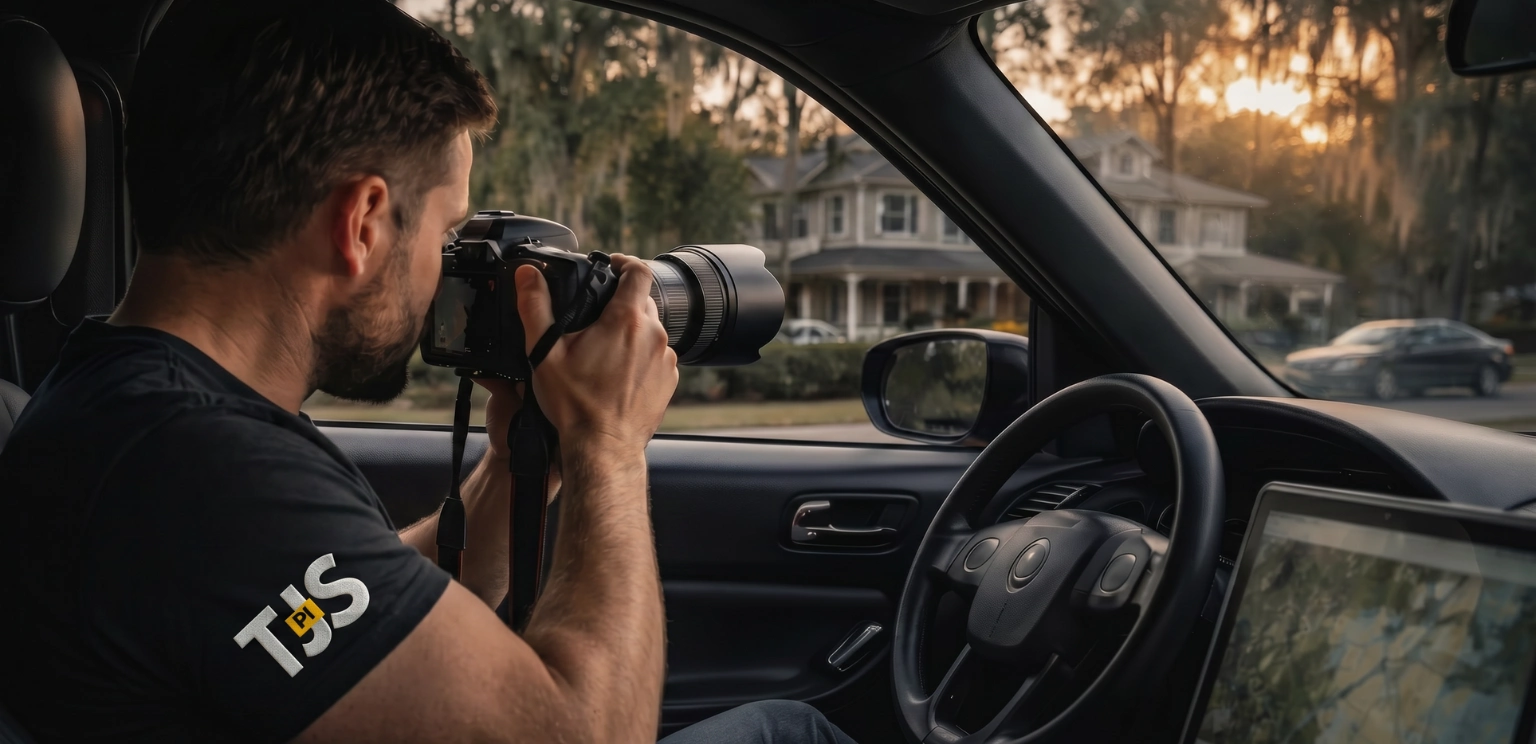
An activity check is a brief, targeted assignment. An investigator visits a relevant location to see whether a person appears to live at an address, whether they appear to be working, or whether there is activity worth documenting further.
Because the scope is limited, an activity check is a cost-conscious way to test a concern before committing to full surveillance. The results help you decide whether more work is justified and, if so, how to plan it.
Common uses for activity checks:
- Confirming a claimant or party appears to reside at a stated address
- Checking whether a person appears to be working at a reported location
- Gauging general activity level before planning surveillance
- Noting vehicles and access points for later coverage
- Confirming a business address is active and operating
- Updating old information in a file
- Deciding whether a concern warrants a larger investigation
Activity checks are a common first step in workers’ compensation investigations and other insurance files, and they are just as useful for attorneys, businesses, and individuals.
02. Capabilities
Brief by design. Useful by intent.
Residence Confirmation
Observe a stated address for signs of occupancy, such as vehicles, lighting, and activity visible from public areas.
Employment Indicators
Check whether a person is seen arriving at, working at, or leaving a reported workplace during the visit.
Activity Snapshot
Record observable activity during a set window to give an initial sense of routine and mobility.
Pre-Surveillance Scouting
Note parking, traffic, sight lines, and practical obstacles that affect how later surveillance should be planned.
Photo Documentation
Photograph the location and relevant observations, with available date and time information.
03. Our Investigators
Small assignments still need judgment.
A short visit leaves little room for error. Our investigators arrive prepared, confirm they are at the right location, and record what they see without reading more into it than one visit can support.
With more than 17 years of investigative experience, TJS knows that a quiet morning at an address does not prove someone lives elsewhere, and one sighting does not establish a routine. We say so plainly and tell you whether further work makes sense, whether the check is near our Houston base or in another state we serve.
04. What Clients Receive
A concise snapshot.
Depending on the check requested and what was observable, you may receive:
- A brief written summary of the visit
- The date, time, and length of the check
- Photographs of the location and relevant activity
- Vehicles observed, where relevant and visible
- Notes on signs of residence, employment, or activity
- Observations that affect future surveillance planning
- Our view on whether further investigation is warranted
An activity check reflects conditions during a limited window. It can confirm what was seen at that time; it cannot establish a pattern, rule out activity at other times, or replace a full investigation when one is needed.
05. Why Choose TJS
Right-sized work for the question.
Experienced
More than 17 years of field work inform where and when a short check is most useful.
Proportionate
We suggest the smallest assignment that can answer your question, and say when more is needed.
Discreet
Visits are conducted quietly from public areas to avoid drawing attention.
Clear Communication
You receive a concise summary written so you can decide on next steps quickly.
06. How It Works
Quick to scope. Easy to build on.
- 01.
Describe the Question
Tell us the person or location and the fact you need confirmed.
- 02.
Set the Window
We agree on the address, timing of the visit, its length, and the cost.
- 03.
Conduct the Check
An investigator visits and documents what is observable from public areas.
- 04.
Review and Decide
You receive the summary and our view on whether further work would help.
07. Frequently Asked Questions
Understand what a brief check can tell you.
1. What is the difference between an activity check and surveillance?
An activity check is a short visit to confirm a specific fact at a point in time. Surveillance is longer, planned coverage that documents movements and activity over hours or days.
2. Can an activity check confirm where someone lives?
It can document signs of residence during the visit. Firmer confirmation may need further visits or records research, such as a background check.
3. How much does an activity check cost?
Because the scope is limited, it generally involves fewer hours than extended surveillance. Cost depends on location and the work involved. See our pricing page or contact us for a quote.
4. What if nothing is observed during the check?
We report that, along with the time and conditions of the visit. A quiet check is still information, but it doesn’t rule out activity at other times.
5. Can an activity check lead into surveillance?
Yes. If the check suggests further coverage would be useful, its observations help us plan surveillance more efficiently.
08. Next Steps
Tell us what needs confirming.
Tell us what you need confirmed and where. We’ll tell you whether an activity check is the right first step.

[Ready to start a conversation]
Start with a focused look.
Tell us the person or address and your question. We’ll explain what a brief check can confirm and what it can’t.
Speak to an Investigator (888) 600-0261
Copyright © 2026 TJS Private Investigations. All rights reserved.